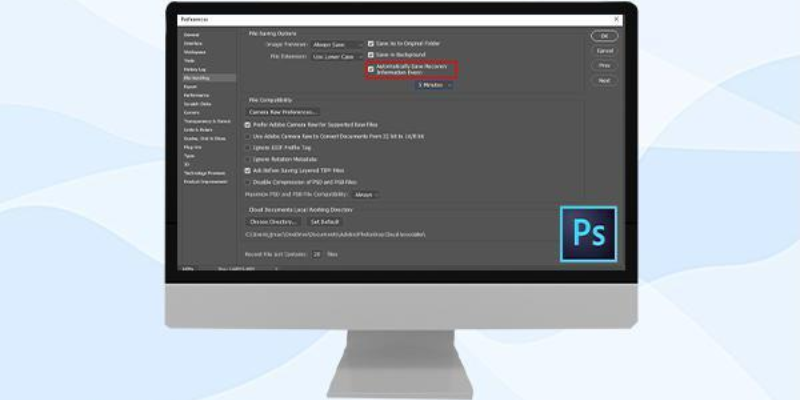
One of the most annoying things that may happen to a graphic designer, photographer, or digital artist is losing hours of design work. Panic and disappointment are frequently the outcome, whether Photoshop crashes without notice, your machine shuts down without warning, or you unintentionally end a document without saving it. Thankfully, Adobe Photoshop has an Autosave tool that automatically saves recovery data at certain intervals to safeguard your work. You may frequently restore unsaved or partially finished projects with the aid of these autosave files and carry on with little data loss.
Nevertheless, a lot of people don’t know where these files are kept or how to get to them when they’re needed. Knowing where to find recovery files and how Photoshop Autosave functions will help you avoid needless stress and save important time. You can learn through FITA Academy. Everything you need to know about recovering lost projects, locating Photoshop Autosave files with ease, and setting up settings to secure your creative work is covered in this article.
Understanding Photoshop Autosave and How It Works
By automatically generating recovery copies of open documents at certain intervals, Photoshop’s Autosave tool acts as a safety net for users. Photoshop periodically saves interim recovery data in the background rather than depending only on manual saves. Photoshop may utilize these recovery files to restore your work when the program resumes in the event of an application crash or an unplanned system shutdown. Most latest versions of Photoshop have autosave enabled by default, but users may choose how often recovery data is stored.
Professionals working on big projects that need lengthy editing sessions will find this option very helpful. Autosave greatly lowers the possibility of losing progress because to technological difficulties, even if it does not completely replace human saving. Knowing this feature enables users to recognize the value of recovery files and gets them ready to find them fast in the event that an unforeseen issue disrupts their work.
Common Reasons Why Photoshop Files Are Lost or Unsaved
Loss of a Photoshop project can happen for a number of causes, many of which are out of the user’s control. One of the most frequent reasons is still software crashes, particularly when dealing with big data, complicated effects, or constrained system resources. Additionally, active sessions may be interrupted by unforeseen power failures before projects are saved. Sometimes users unintentionally shut Photoshop without storing their changes, or they replace crucial files with the wrong versions. File loss may also be caused by hardware malfunctions, storage device problems, and operating system changes. Another problem is corrupted PSD files, which make it difficult for users to successfully open their stored projects.
Fortunately, by storing recent work in temporary recovery files, Photoshop Autosave may assist in many of these circumstances. Understanding the reasons behind deleted data enables users to take preventative action and react appropriately when issues occur. Learn Photoshop Classes in Chennai for expert guidance. Finding the right Autosave file and recovering your priceless design work will become simpler the quicker you identify the cause of the problem.
Default Locations of Photoshop Autosave Files on Windows and macOS
Knowing where Photoshop Autosave files are stored makes it much easier to locate them. Recovery files are usually found in the user’s AppData directory on Windows PCs. C:\Users[Username]\AppData\Roaming\Adobe\Adobe Photoshop [Version]\AutoRecover is a typical location. Users may need to activate hidden files and folders using File Explorer settings since the AppData folder is hidden by default. Autosave files on macOS are often kept in the Library folder located at Users/[Username]/Library/Application Support/Adobe/Adobe Photoshop [Version]/AutoRecover.
Although the Library folder is hidden by default, users can reach it by using the Go menu in the Finder. The precise route may differ significantly based on your system settings and Photoshop version. If Photoshop does not automatically restore your documents following a crash or abrupt shutdown, you can find recovery files manually by looking through these places.
Step-by-Step Guide to Finding and Recovering Autosave Files
When you follow the right procedures, recovering Photoshop Autosave files is a simple task. First, following a crash, reopen Photoshop to see if restored documents are immediately shown. Save recovered files right away with a new filename if they show up. Use the proper file path for your operating system to access the AutoRecover folder if automated recovery does not take place. Look for files that have been updated lately and correspond to the last time your project was active. To prevent inadvertent overwriting, copy these files to a different folder before accessing them.
To access the recovery file, launch Photoshop and utilize the Open command. In certain situations, Photoshop may be able to identify the file correctly if the file extension is changed to PSD. Try to learn from Training Institute in Chennai so it will be effective. Save the document under an other name when it has been opened, and make sure that any significant changes have been recovered. By carefully following these methods, hours of creative labor that could otherwise be lost can frequently be recovered.
How to Adjust Autosave Settings for Better File Protection
Your chances of retrieving lost work can be greatly increased by properly configuring Photoshop’s Autosave settings. Select File Handling after opening Photoshop and going to Preferences. The Automatically Save Recovery Information Every option is located in this section. Photoshop lets users select intervals between five and an hour. Shorter intervals are frequently used by designers working on important projects in order to reduce the possibility of data loss. Modern systems usually manage the process effectively, even if more frequent saving may result in a minor increase in background activity.
Making ensuring there is enough storage space for recovery data is also crucial. Updating Photoshop on a regular basis helps address known stability concerns and enhance recovery performance. Important projects are best protected when Autosave is combined with manual saving practices. You may establish a more dependable and secure design environment that reduces interruptions from unplanned crashes or system failures by tailoring these settings to your workflow and project complexity.
Troubleshooting When Autosave Files Cannot Be Found
Even after looking in the anticipated folders, users occasionally fail to find Photoshop Autosave files. Several troubleshooting methods could be useful in these circumstances. First, make sure Autosave was turned on prior to the file loss. Recovery files might not be there if the function was turned off. Next, confirm that your operating system’s hidden folders are visible. Recovery data kept in many places can be found by searching your computer for recently edited PSD, PSB, or temporary files. Custom recovery routes may also be seen by looking via Photoshop’s Preferences.
Look for references to previously saved projects in Photoshop’s Recent Files list. Sometimes temporary files are removed by disk cleanup programs and storage optimization tools, which lowers the likelihood of recovery. These are the features of photoshop. As a result, refrain from using these tools right away following data loss. Professional file recovery software may be able to restore temporary data that have been erased under challenging situations. The chances of successfully retrieving important project data are frequently increased by perseverance and careful searching.
Using Temporary Files and Backup Options to Recover Lost Projects
Photoshop generates temporary files that could include recoverable project data in addition to Autosave files. After a crash, these files frequently stay on the system and can occasionally be manually restored. Users can check for Photoshop-related temporary files in system temp folders or search for files with extensions like.tmp. Furthermore, version histories that might aid in the restoration of earlier document states are frequently maintained by cloud storage services like Dropbox, Google Drive, OneDrive, and Adobe Creative Cloud.
Additionally, operating systems come with backup tools like macOS Time Machine and Windows File History, which could hold older PSD files. When unforeseen problems arise, designers who routinely backup their designs benefit from having several choices for recovery. A complete security plan is produced by combining Photoshop Autosave, external backup programs, and temporary file recovery. This multi-layered strategy makes sure that essential creative work is protected even in the event that one recovery technique fails.
Best Practices for Preventing File Loss and Improving Project Management
The greatest method for preventing file loss is still prevention, even though Photoshop Autosave offers great security. Make it a habit to regularly save your work using keyboard shortcuts like Command+S on macOS or Ctrl+S on Windows. Establish well-organized folder structures to facilitate the management and location of project files. Utilize both local and cloud-based storage options to keep several backup copies. Update your operating system and Photoshop often to increase reliability and lessen crash-related problems.
When working on big projects, shut down unused apps to free up system resources and boost efficiency. storing incremental project versions throughout significant editing stages in order to use version control techniques. These practices enhance project organization and workflow effectiveness in addition to lowering the risk of data loss. Strong file management techniques combined with Photoshop’s built-in recovery features allow designers to concentrate on their work without having to worry about losing important pieces all the time.